For our spring project, we partnered with the Detroit Land Bank Authority (DLBA), a public entity. As the largest land bank in the country, the DLBA “plays a critical role in stabilizing neighborhoods, returning vacant properties to productive use, and expanding access to attainable homeownership across the city of Detroit. The DLBA manages a portfolio of publicly owned properties, including vacant lots, residential structures, and other structures that have gone into foreclosure. Through a variety of sale programs like Auction, Own It Now, Side/Neighborhood Lot Program, Rehabbed & Ready, and the Buy Back Program, the DLBA strengthens Dertroit’s neighborhoods by transforming vacant land and abandoned properties into inclusive community assets.”
P A R T N E R S
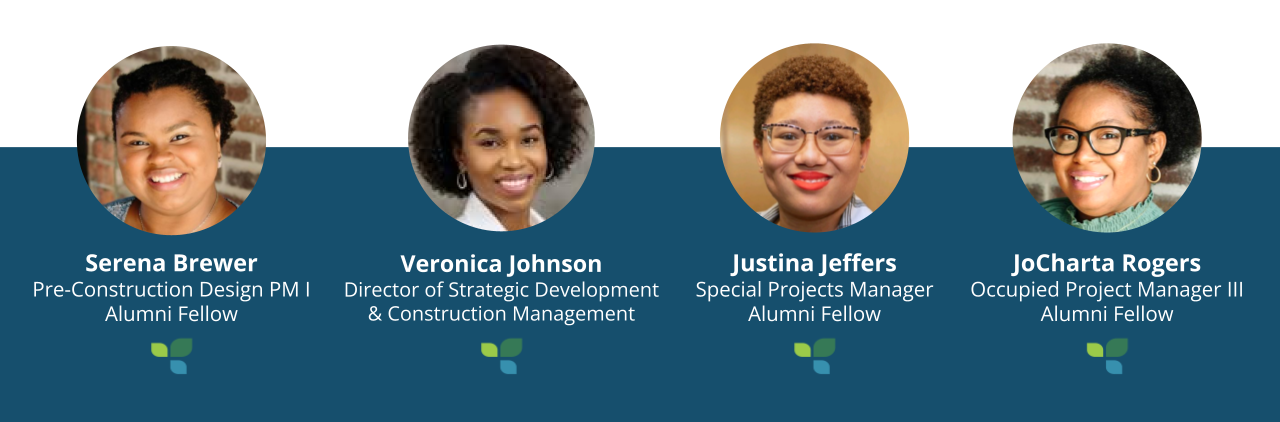
Last fall, we reached out to Challenge alumni fellow Serena Brewer, who has been at the Land Bank since her fellowship year (2022-2023), to explore a potential project partnership. Serena brought in Veronica Johnson, the Land Bank’s Director of Strategic Development & Construction Management, along with other alumni Fellows at the Land Bank, JoCharta Rogers and Justina Jeffers. Veronica played a key role in shaping the scope and direction of the project, while Serena, Jo, and Justina served as team liaisons, working closely with the fellows each Friday to guide and support the process.
P R O J E C T F O C U S
We previously partnered with the Land Bank during the 2017-2018 program year (nearly a decade ago!) and focused on neighborhood engagement. Through that project, we strived to increase awareness of the Land Bank’s programs and clarity on its processes along with ensuring city residents had a baseline understanding of the purpose and work of the Land Bank. For this new project, our focus turned to affordable housing, a pressing challenge not just in our region, but around the country. To help alleviate some of the city’s need, the Land Bank is embarking on creating the Affordable Housing Pipeline Initiative (AHPI), which is “focused on small and mid-scale multi-family redevelopment projects across the city. The new initiative aims to fill a critical market gap by tackling properties that are too small for large-scale developers yet too complex for small-scale builders. Through this approach, the DLBA will help return underutilized buildings to productive use, expanding Detroit’s supply of attainable quality housing and advancing the agency’s mission to drive equitable neighborhood reinvestment citywide.”
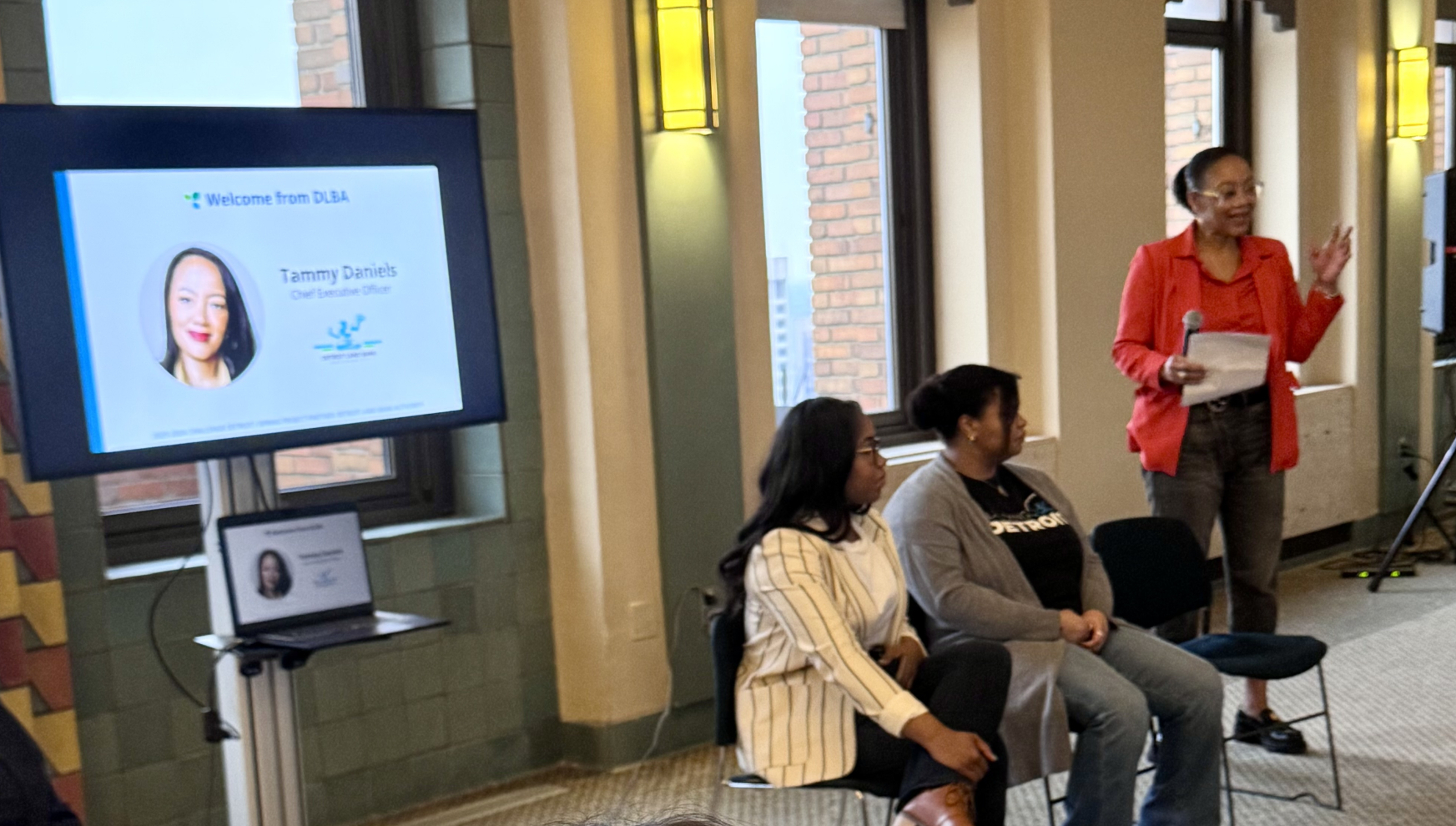
Project Kick-Off: Welcome from DLBA CEO Tammy Daniels.
The Land Bank identified three key areas they felt were critical to building the Pipeline: 1.) Community Engagement and Final Disposition, 2.) Contractor and Developer Capacity Building, and 3.) Design, Affordability and Long-term Sustainability. These focus areas allowed us to explore the essential components needed to strengthen and support the Pipeline to address our overarching design prompt:
“How might we support the Detroit Land Bank Authority’s Affordable Housing Pipeline Initiative to restore underutilized multi-family buildings across Detroit?”
C O N T E X T B U I L D I N G
The week before our project with the Land Bank began, we heard from Detroit Future City’s (DFC) Director of Research, Edward Lynch, about their research findings and advocacy surrounding growing Detroit’s middle class and how housing and homeownership (amongst many other factors) play a role in achieving this goal. This provided Fellows with a crash course in housing-related terminology (such as Area Median Income), while deepening their understanding of Detroit’s evolving housing landscape, the progress the city has made, and the challenges that remain. It also highlighted the complex connections among population growth and retention, income, education, housing access, economic opportunity, and overall community well-being.
Now that Fellows were equipped with a more nuanced and balanced perspective as they approached the project with the Land Bank and its broader community impact, the following week we dove right in to using a human-centered/design-thinking approach, to keep our partners and their stakeholders at the center of our process. The first couple of Fridays were focused on the fellows building Land Bank-specific context and learning about the entity and their work through observation, listening sessions, immersion and interviews. We heard from DLBA Executives, staff and key stakeholders to better understand how the DLBA operates and works with various city departments, contractors, residents, buyers, community partners and more.
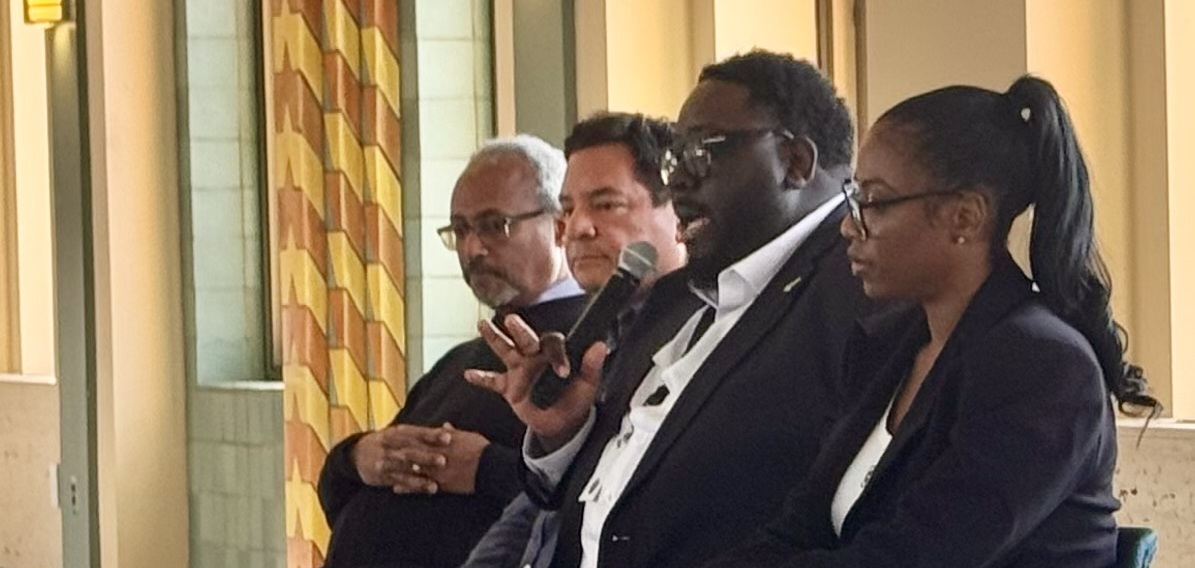
Panelists (L to R): Robert Saxon, Jr. (DLBA), Andres Valbuena (VR Homes), Joshua Roberson (City of Detroit Department of Neighborhoods), Nicole Simmons (DLBA)
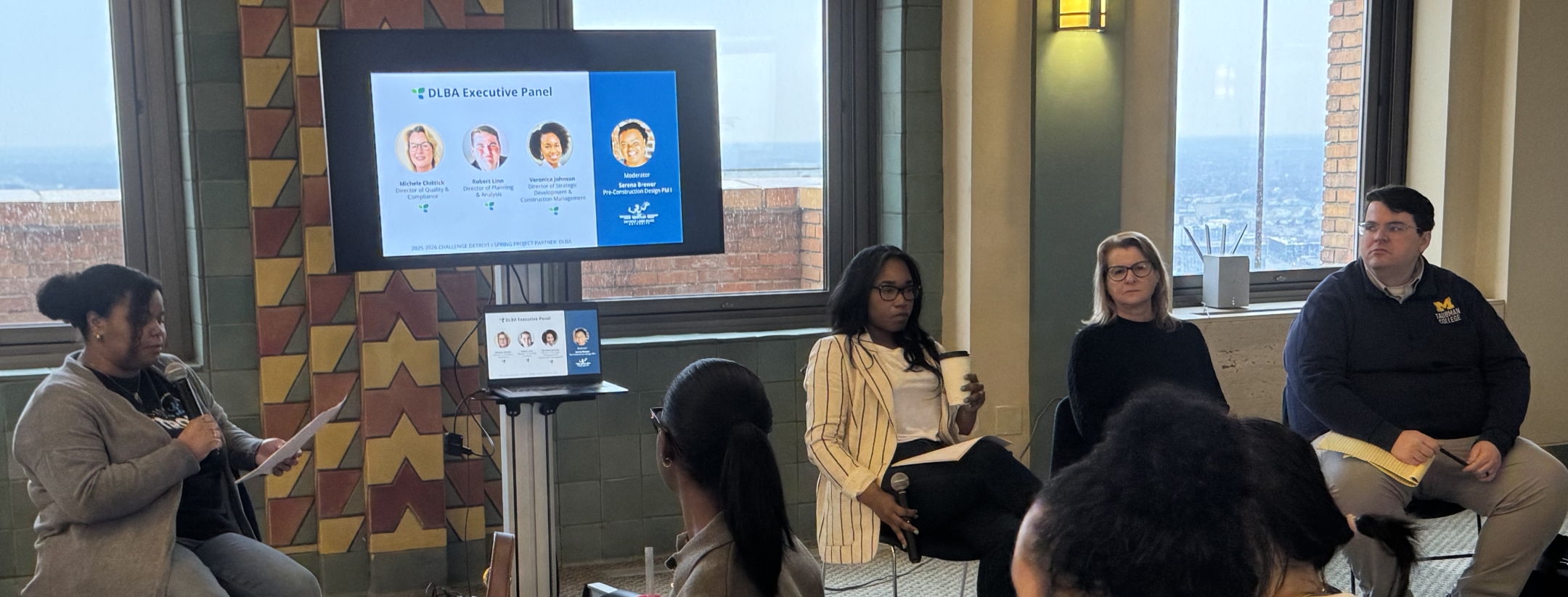
DLBA Executive Panel (L to R): Veronica Johnson, Michele Chittick, Robert Linn. Moderated by Serena Brewer (far left).
To take it even further, we challenged our partners to really give the fellows an experience that would help them to understand just how complex the rehab process is for the Land Bank. Pulling from their fellowship experience, Serena Brewer and Justina Jeffers applied a little design thinking of their own to create an immersive experience that allowed Fellows to step into the shoes of DLBA staff. They developed a game called Rehab Rumble, where teams were presented with real-world scenarios and challenged to navigate the kinds of decisions DLBA staff face throughout a rehab project balancing budget, timeline, quality constraints, and surprise setbacks along the way. The experience gave Fellows a deeper understanding of the thoughtful and complex work that goes into DLBA’s approach.
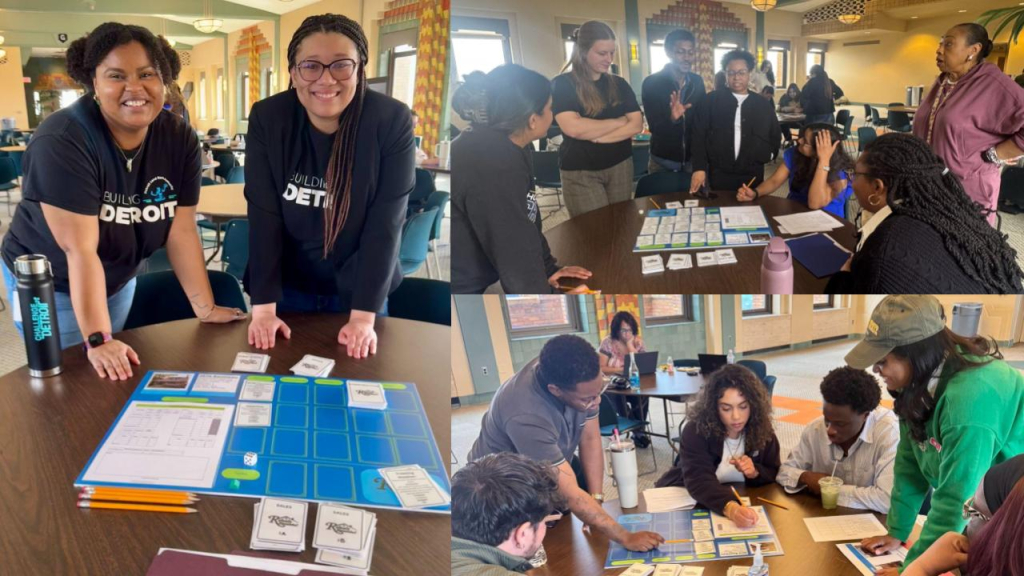
DLBA staff and Challenge Detroit alumnae, Serena Brewer and Justina Jeffers (left photo), created the game “Rehab Rumble” to give fellows experience with the real-life scenarios the DLBA rehab team navigates, including the unexpected challenges that often arise during the home rehabilitation process.
For additional context building, we then spent one of our Fridays at a rehabbed duplex (and visited another) in the West End neighborhood on the east side of the City, and fellows conducted interviews with various stakeholders including contractors, partners, housing organizations, community leaders, design professionals and more DLBA staff. We also spent time with and learned about the programs, resources, and support systems at Invest Detroit, Motor City Contractor Fund, Goodwill Detroit and TechTown that could complement and strengthen the Land Bank’s efforts. These conversations helped Fellows better understand the broader ecosystem of organizations working to advance housing, economic mobility, workforce development, and neighborhood development across Detroit.
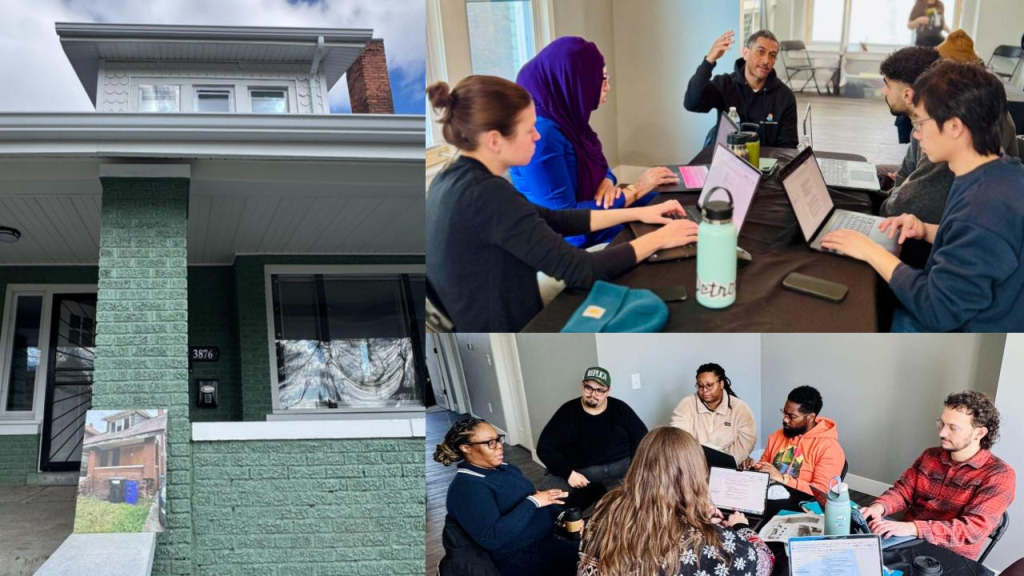
Context Building: We spent one of our Fridays in this rehabbed duplex on the City’s east side (and visited another about a block away) where fellows conducted interviews with various stakeholders.
C O L L A B O R A T I O N A N D O U T C O M E S
The fellows then worked in their teams to identify recurring themes and patterns, generated a large quantity of possible solutions for their team’s specific design focus, then worked together to process those ideas along with our partners. Once constraints and parameters were considered, prototypes of the most feasible ideas were built by the teams then tested by our partners, stakeholders and with each other. That feedback was then used to refine the final products and on May 8, we presented about the outcomes of the partnership.
Read the team blogs for a more in-depth look at each team’s focus and outcomes below:
- Community Engagement and Final Disposition
- Contractor & Developer Capacity Building
- Design, Affordability & Long-term Sustainability
G R A T I T U D E
Thanks to the DLBA team— Serena Brewer, Veronica Johnson, Justina Jeffers and JoCharta Rogers, and the rest of the team— for your trust, collaboration and generosity of time!
We also want to thank AAA Auto Club Group (especially alumna Gabrial Taylor Saddler), Invest Detroit, Goodwill Detroit, and Techtown for hosting us in their spaces during this project.
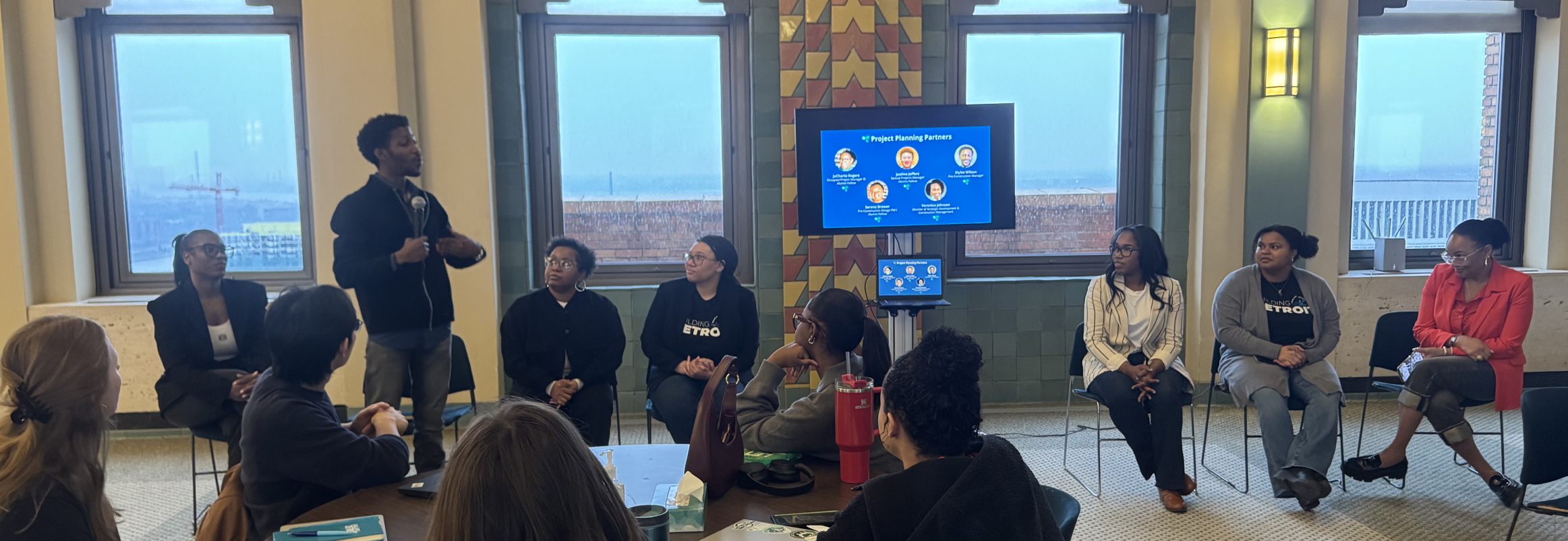
DLBA staff at our project kick-off (L to R): Nicole Simmons, Myles Wilson, JoCharta Rogers, Justina Jeffers, Veronica Johnson, Serena Brewer, Tammy Daniels.
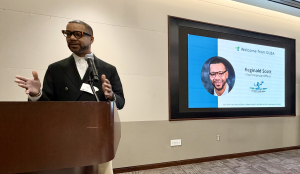
Welcome from Reginald Scott, the Detroit Land Bank’s CFO.
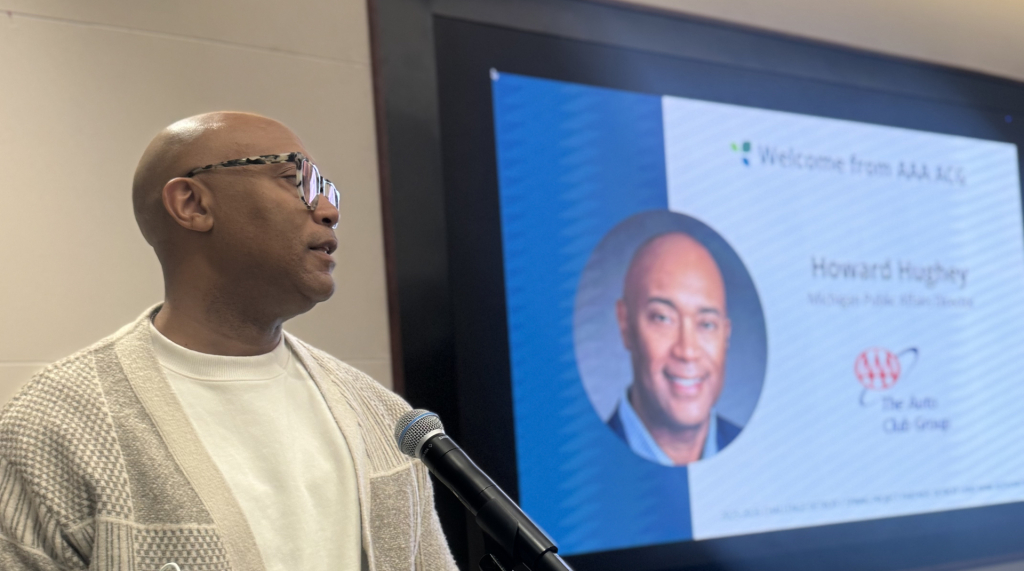
Welcome from Howard Hughey, Michigan Public Affairs Director, AAA-The Auto Club Group (our event sponsor).
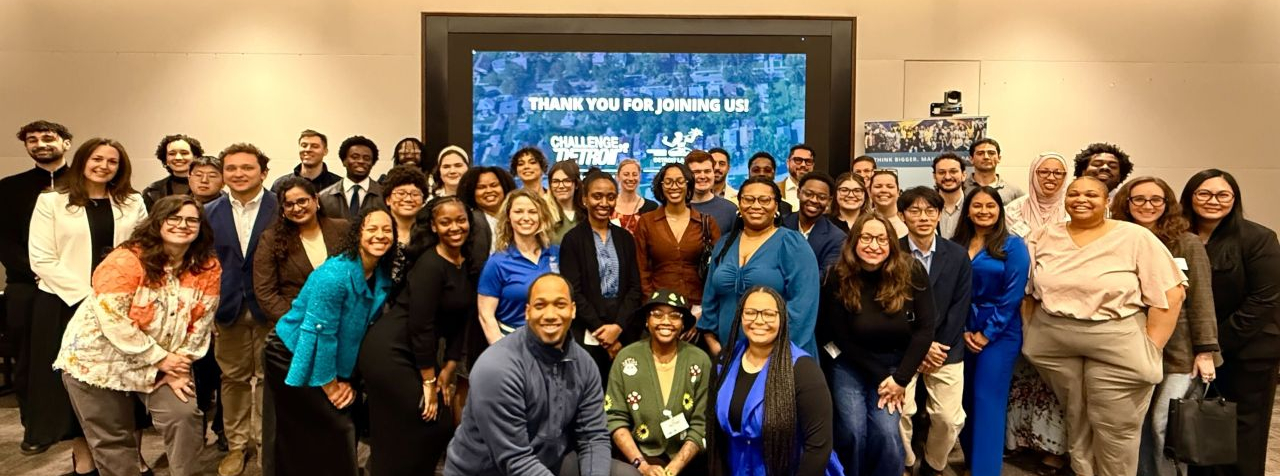
Challenge Detroit Alumni, Fellows and Staff take a photo after the project presentation (Photo courtesy of AAA Auto Club Group).