 Hello readers,
Thanks for taking the time to read our blog in the era of 30 second reels and limited attention span. Trust us when we tell you that this blog is interesting, a story of six Fridays, and seven people navigating a solution to a problem.
By seven people, we mean the story of Ann, Rachel, Nate, Joelle, James, Kearney, and Shruti who came together as a part of their Challenge Detroit Fellowship and worked with and for the Detroit Land Bank Authority to help support their Affordable Housing Pipeline Initiative. The question they were trying to answer was: “How might we create an innovative multi-family housing design approach for the DLBA that balances construction feasibility, long term affordability, and sustainable performance while remaining scalable across projects of varying sizes?”
Woooof, that seems like a big question, right? So the seven people pulled up the key words like long-term affordability, sustainability and multi-family development. They then went to people/stakeholders who would help find multiple ways to skin a cat. They heard from Shaker Manns, Kenneth H. Crutcher, and Michael Mcknight.
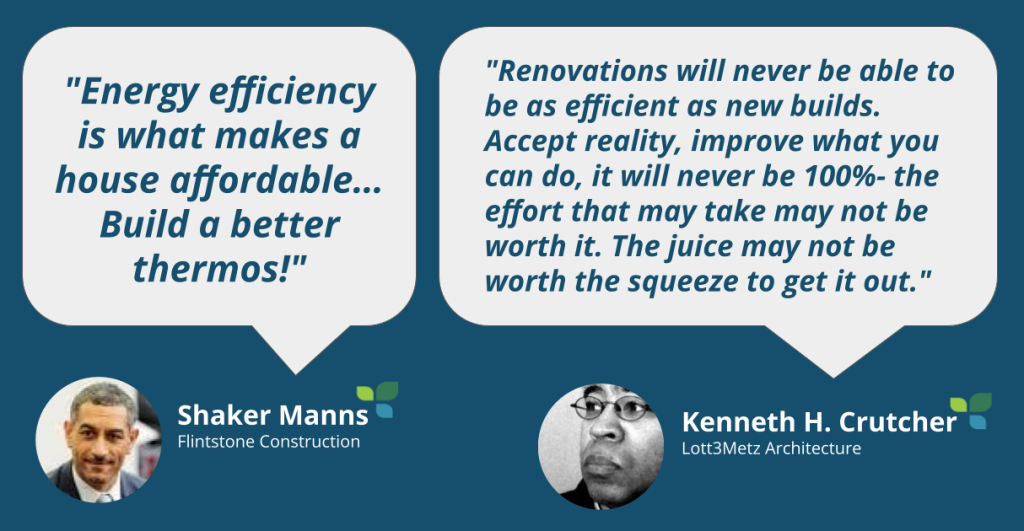
- “Energy efficiency is what makes a house affordable… Build a better thermos!” – Shaker Manns from Flintstones Construction
- “Renovations will never be able to be as efficient as new builds. Accept reality, improve what you can do, it will never be 100%- the effort that may take may not be worth it. The juice may not be worth the squeeze to get it out.”- Kenneth H. Crutcher from Lott3Metz Architecture
- “The most valuable thing that you own is your home, but it’s the only thing that doesn’t come with an instruction manual.” – Michael McKnight- VP of National Programs at Green & Healthy Homes Initiative
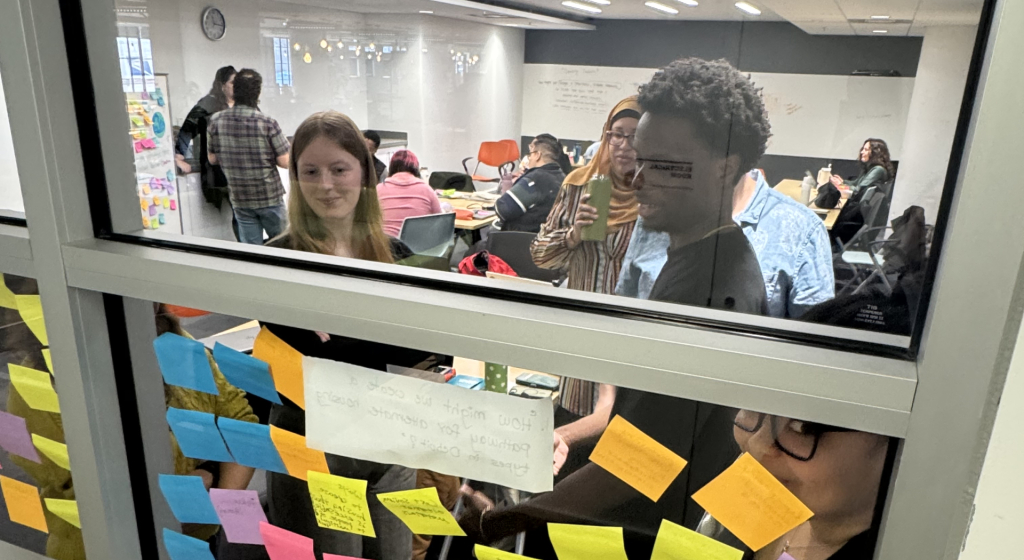
Ideating!
Taking these insights into consideration, the team of seven people tried to pencil out learnings and ideas into tangible products which were:
- The Design Decision checklist intends to create a system for the Land Bank to organize and weigh decisions to build a final rating of the design in order to promote environmental and financial sustainability, as well as long-term livability. Once the Land Bank team determines their tier system and values for different design decisions, this will be a tool to justify design decisions and ensure that there are standards to promote sustainable practices, long-term cost savings for homeowners, and design choices that promote accessibility of spaces.
- We also created a typology matrix to classify the types of multi-family housing projects feasible in Detroit. This matrix is split between New Construction and Renovation. We determined that renovation presents unique challenges that New Construction can solve (and visa versa). So the matrix will help the Land Bank determine what type of multi-family housing is appropriate for a particular neighborhood or site.
- The final deliverable we created is a homeowner’s guide to help homeowners understand the sustainable features in their house. Including: insulation R-values, window U-values and heating and cooling efficiency terms. These features result in lower utility bills for residents which leads to a more sustainable ownership model.
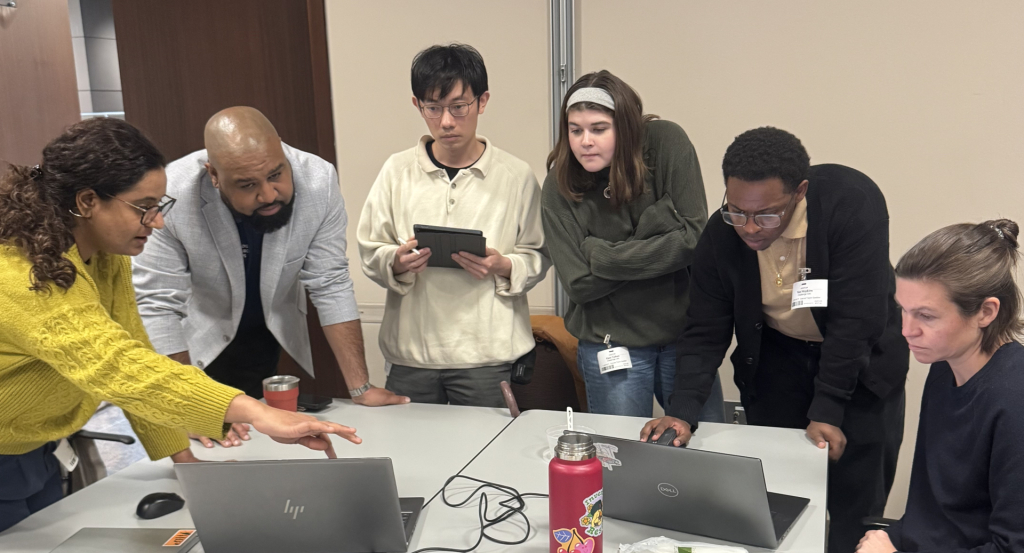
Testing deliverables with other teams and alumnus Jarrett Waddy (second from the left).
It has truly been an incredible experience working with and alongside the Detroit Land Bank Authority on the Affordable Housing Pipeline Initiative. Over the course of six Fridays, roughly 48 hours together, our team had the opportunity to better understand not only the complexity of DLBA’s work, but also the dedication behind it.
What stood out to us most was how much DLBA manages in-house. From taking homes down to the studs, to remediation, refurbishment, renovation, and ultimately preparing properties for resale, all while coordinating with multiple city departments and stakeholders. The amount of effort behind every project is immense.
We’d like to especially want to acknowledge our team liaison, Serena Brewer. She would meet with us after already visiting multiple sites in a single day, while simultaneously managing calls, coordinating projects, and still taking the time to guide and support our team. So, a huge thank you to her for her energy, patience, and commitment throughout this process.
What kept all of us going was the shared pursuit of affordable housing and the belief that this work matters. The deliverables we created are not the final solution, but rather a starting point, a framework that can continue to evolve and support the success of the Affordable Housing Pipeline Initiative moving forward.
Thank you again to DLBA for trusting us, collaborating with us, and allowing us to contribute to such meaningful work.
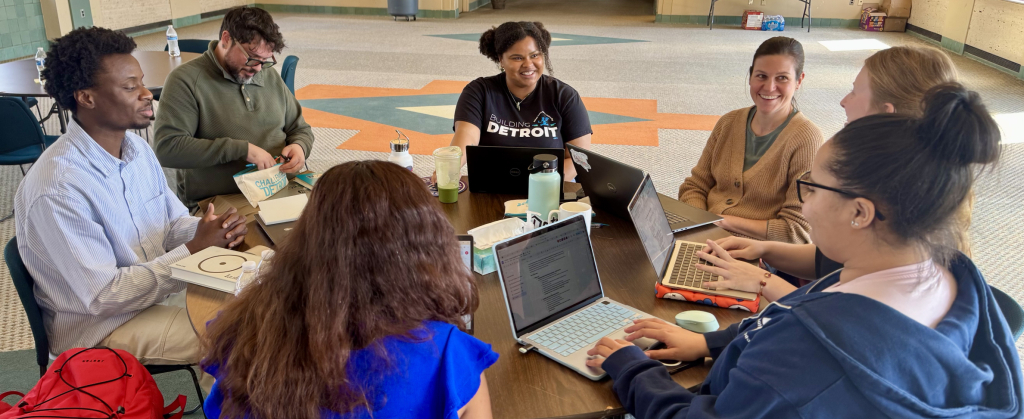
The Design team with their Land Bank liaison, Serena Brewer (middle).
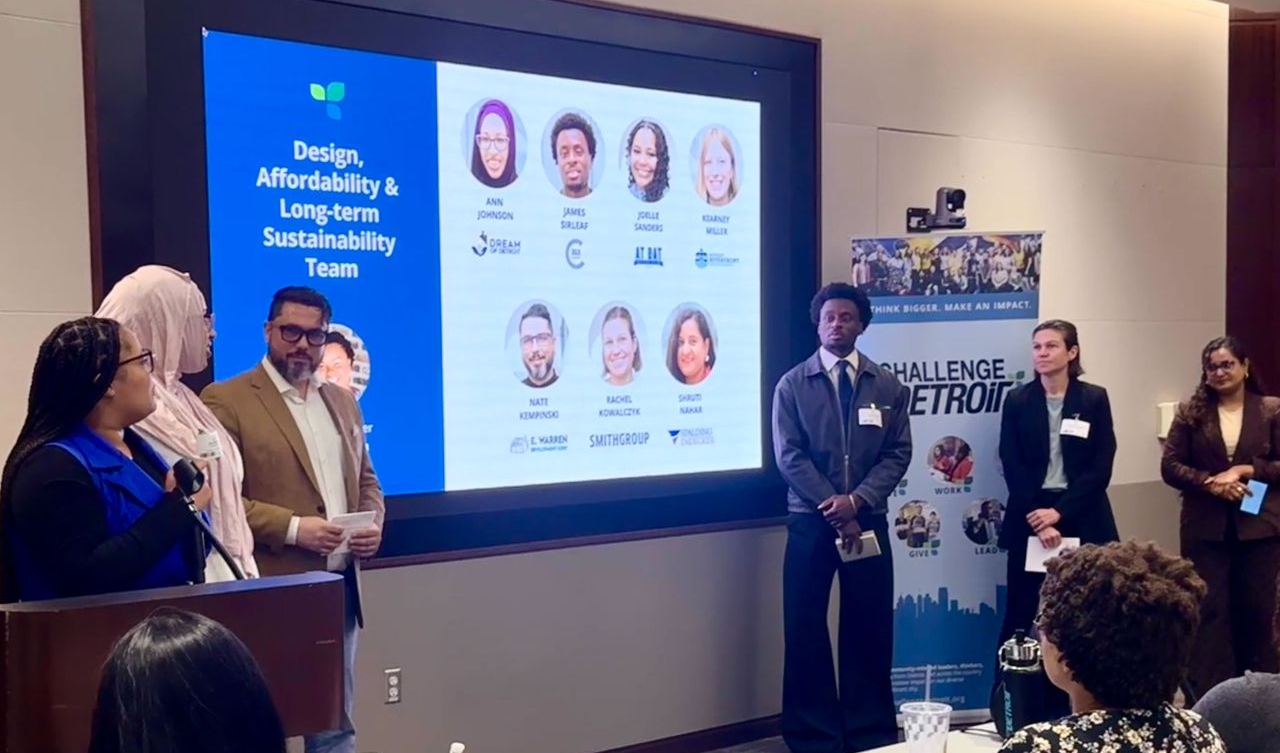
Presentation Day (Photo Courtesy of AAA Auto Club Group).