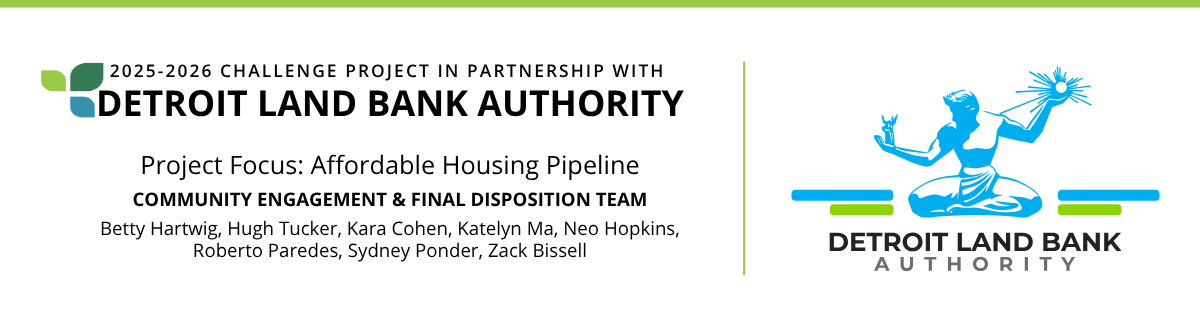
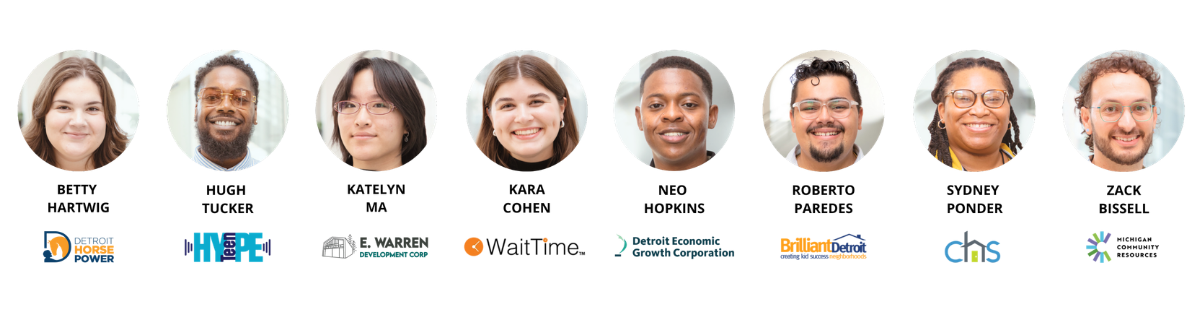
Our team’s collaboration with the Detroit Land Bank Authority (DLBA), through our fellowship with Challenge Detroit, focused on strengthening how community voices are incorporated into decisions about property disposition. From the start, we were grounded in a central design question: “How might we sequence and align community engagement so that final disposition decisions reflect community input, while staying grounded in the Land Bank’s program goals and feasibility constraints?”
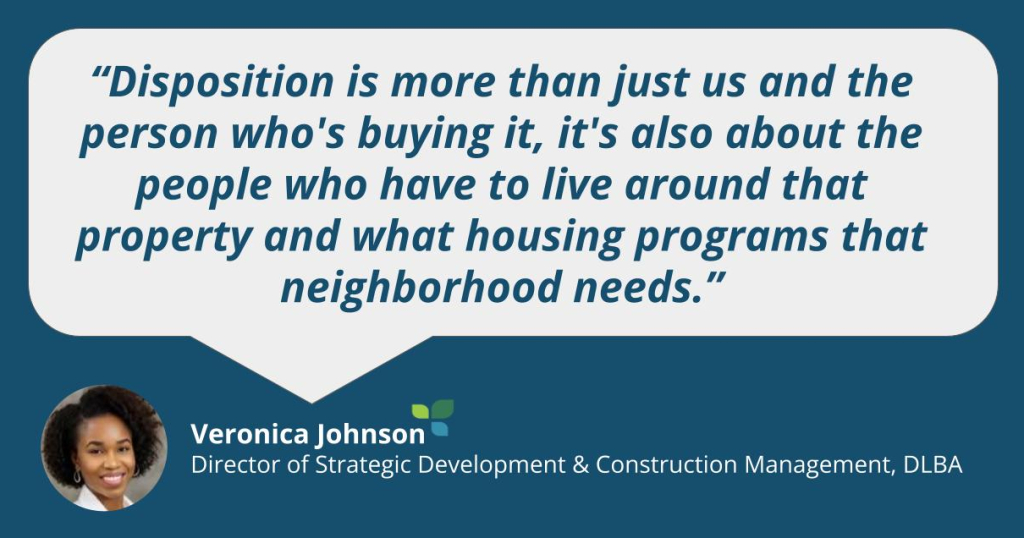
As we explored this question, it became clear that disposition is not just a transaction between the DLBA and a potential buyer—it is deeply connected to the surrounding community. As Veronica Johnson shared, “Disposition is more than just us and the person who’s buying it, it’s also about the people who have to live around that property and what housing programs that neighborhood needs.” This insight ultimately pushed us to think more holistically about how decisions are made, and how community needs can be meaningfully integrated into those decisions.
At the same time, we learned that community engagement must be intentional, structured, and realistic. Stephanie Osterland emphasized the importance of setting clear expectations and early communication, noting that sharing plans at a high level—and being transparent about the purpose and limitations of the work—helps communities engage productively without creating misaligned expectations or unfeasible requests. This shaped a core challenge for our team: how might we design engagement pathways that meaningfully inform and involve residents without overwhelming the process?
We also heard that access to information and strong relationships are critical to meaningful engagement. As Tamika McLean shared, “Individuals don’t know who to contact for certain things, it’s hard to navigate so making them aware of the information is important.” Alongside this, the importance of trust—whether through direct relationships with homeowners or through established partners like Habitat for Humanity—reinforced the need for engagement approaches that not only support immediate decision-making, but also build long-term connections within neighborhoods.
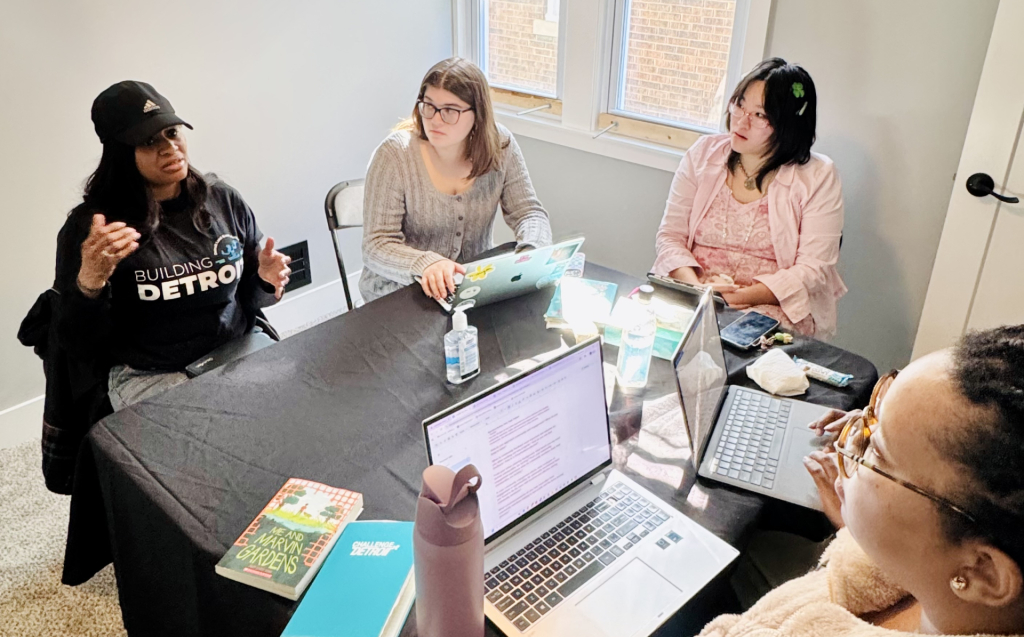
Tamika McLean from the Land Bank sharing her insights with our team.
In response, our team developed a suite of documents designed to support DLBA’s community engagement efforts and connect those efforts directly to property-level decisions. One of our primary deliverables is an Engagement Toolkit, which includes a timeline of community engagement activities tied to key disposition decisions, a checklist for each stage of engagement, and a set of recommended methods—along with potential partnerships with Community Development Organizations—to effectively reach and involve community members. These tools are designed to centralize information, clarify points of contact, and create a more accessible and transparent engagement process.
On the disposition side, we translated these insights into a more structured and transparent decision-making framework. We asked: how might we design a disposition pathway that clearly outlines available options, incorporates key decision points, and meaningfully integrates community feedback? To answer this, we created a Disposition Plan that outlines four recommended disposition options, supported by case studies from other cities as well as examples already in use in Detroit.
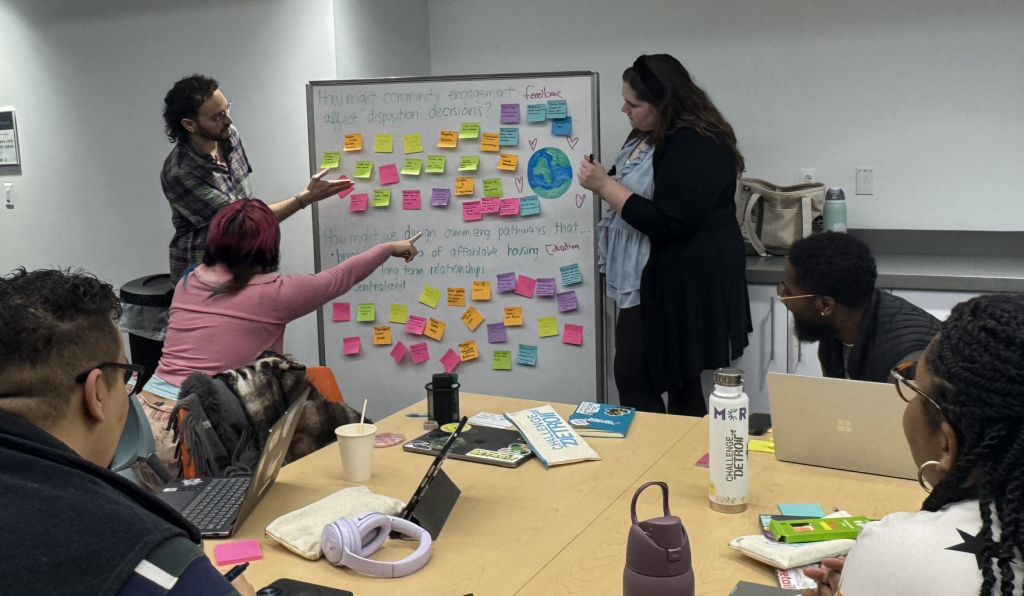
Narrowing down our ideas.
To make these options actionable, we developed a Disposition Matrix that considers building conditions, neighborhood factors, market strength, funding availability, and partnership opportunities. This matrix is then paired with community engagement outcomes, ensuring that resident input is not just collected, but actively shapes the final disposition strategy for each property. Additionally, we compiled an idea bank to capture innovative concepts that, while not included in our final recommendations, may serve as inspiration for future work.
This project truly lived up to the Challenge Detroit name. It challenged both our understanding of the DLBA and our perspectives on affordable housing more broadly. Throughout our collaboration, we engaged in meaningful conversations about what affordability really means, the realities of the housing crisis, and potential solutions to housing instability. This deeper level of engagement pushed us beyond the initial project scope and informed the recommendations we ultimately delivered—insights that we will carry forward in our future work.
We are incredibly grateful to the many partners and stakeholders who shared their time and expertise with us. A special thank you to JoCharta Rogers, our liaison, for her leadership and guidance as we navigated the many facets of this project. We also extend our appreciation to Veronica Johnson for leading the design of our project and for the depth of her insight.
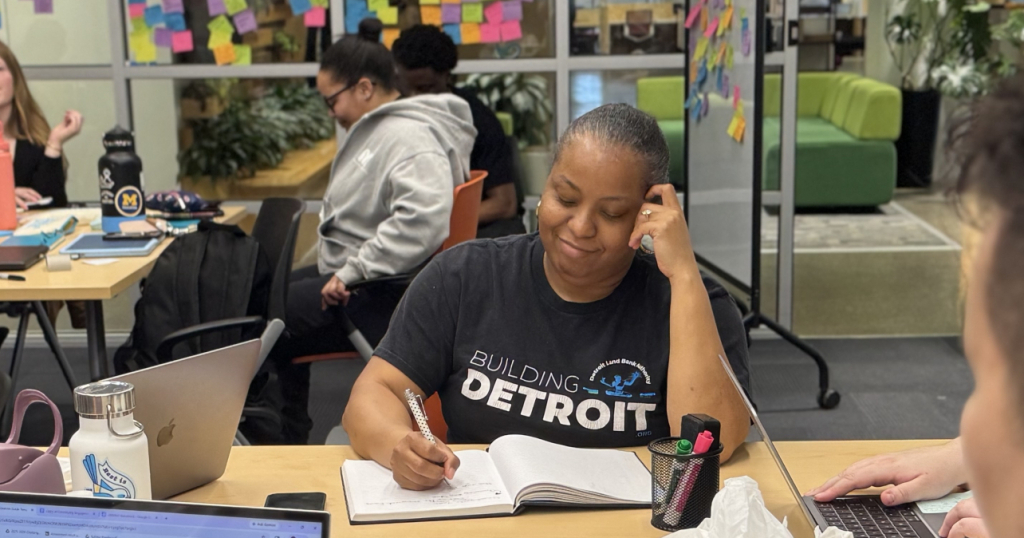
Thank you to our liaison, JoCharta Rogers!
We are equally thankful to the stakeholders who provided invaluable perspectives throughout this process, including Brittany McGee, Tamika McLean, London Scott, Nicole Simmons, and Wendy Carty-Saxon. Their contributions were essential in shaping both our approach and our final deliverables.
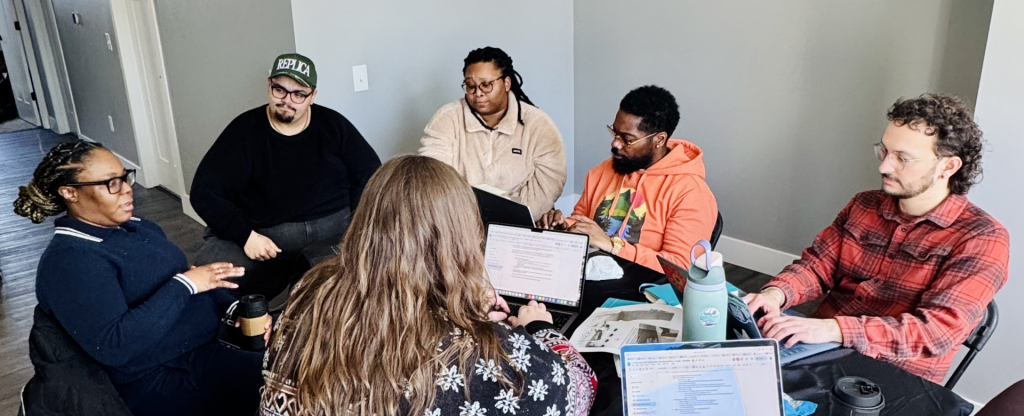
Thanks to Brittany McGee (far left), one of the stakeholders for our team.
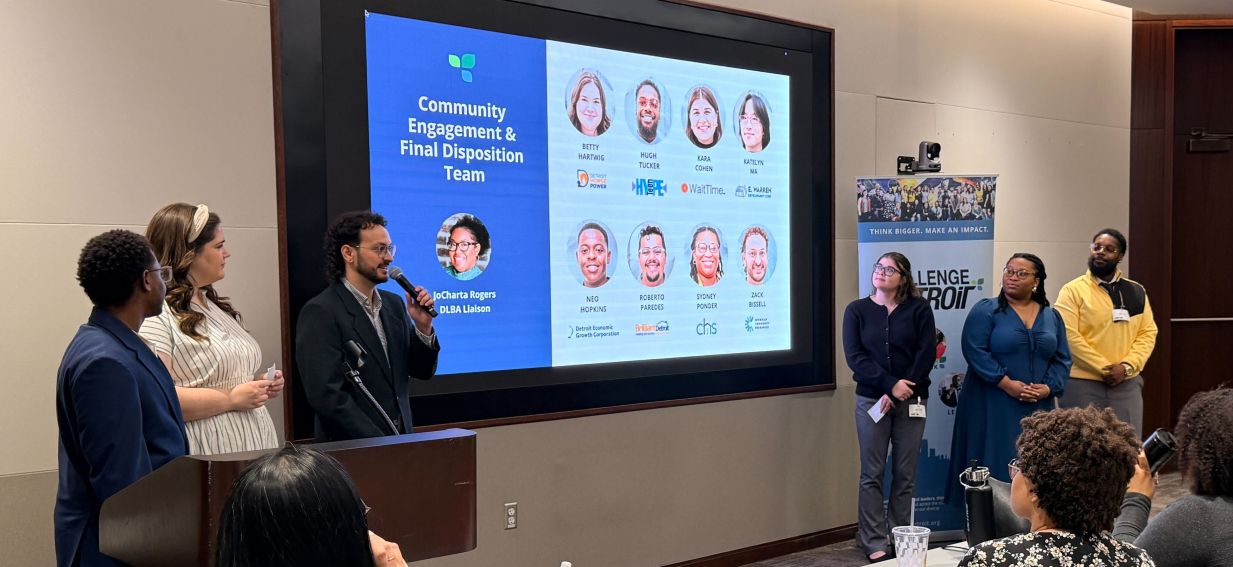
Presentation Day (Photo courtesy of AAA Auto Club Group).