
This holiday break was my first time home to Iowa since moving to Detroit in August. While visiting my grandparents, I realized the similarities between the hard-working farmers with whom I was raised and the hard-working Detroiters with whom I now choose to learn from and live amongst. This blog post highlights one such farmer and his current project.
This is my grandpa. His name is Arnold Torkelson. He is 100% Norwegian and lives in a tiny farm town in northwest Iowa, approximately 20 miles from where I grew up.
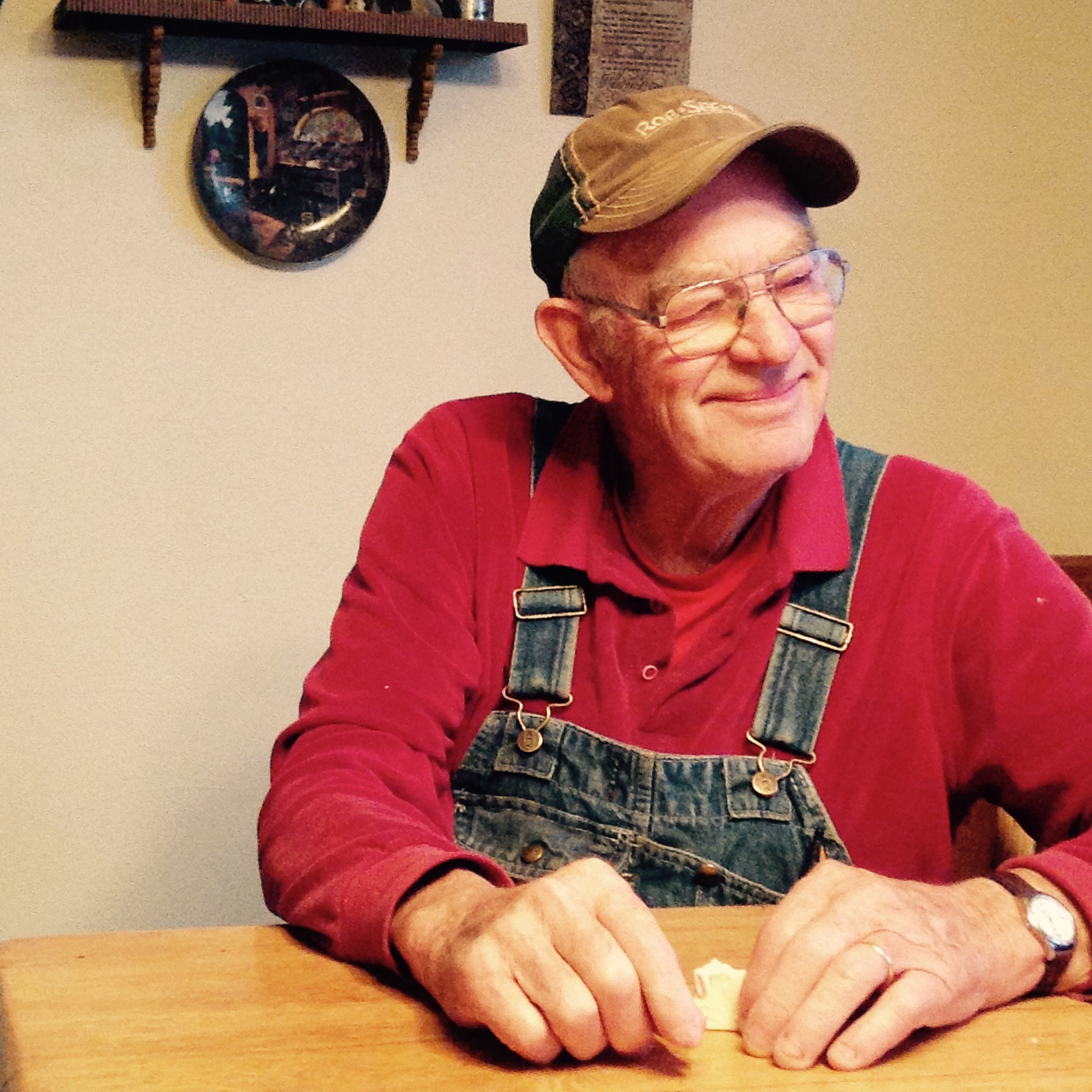 He is the oldest boy of a family of thirteen children and has spent his entire life as a dairy and crop farmer. He retired from dairy farming approximately fifteen years ago but still plants and harvests corn and soybeans on his land. He is one of the hardest workers I know. Growing up as part of such a large family, he has always been frugal and has thus honed his creativity and resourcefulness. He has a reputation of being able to fix anything with bailing twine, therefore, it didn’t surprise me when I visited he and my grandma this summer to find his barn partially disassembled. Once harvest was completed this fall, he started back in on the deconstruction of his barn.
Here is is progress as of December 28th, 2014. (Keep in mind he is 81 years old)
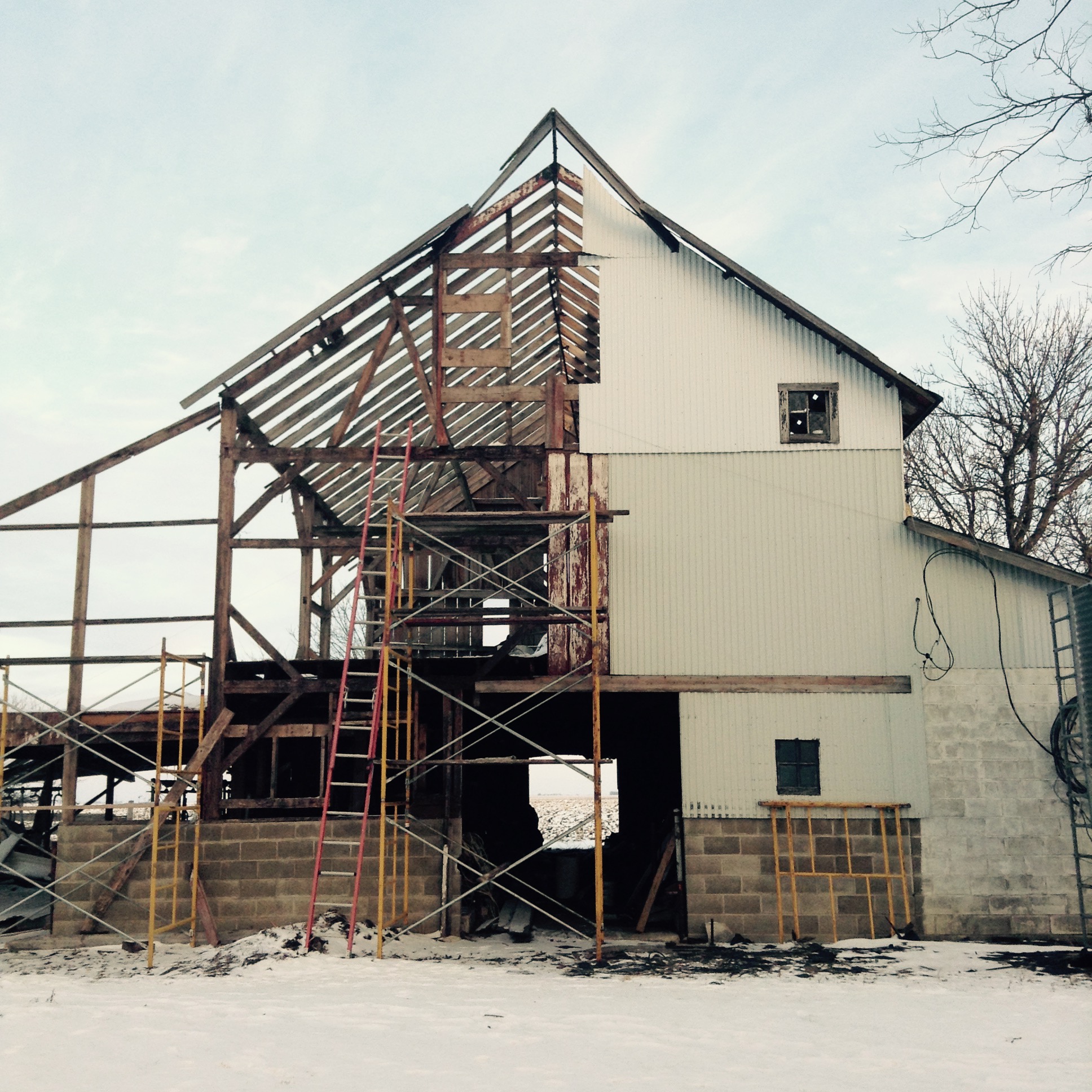
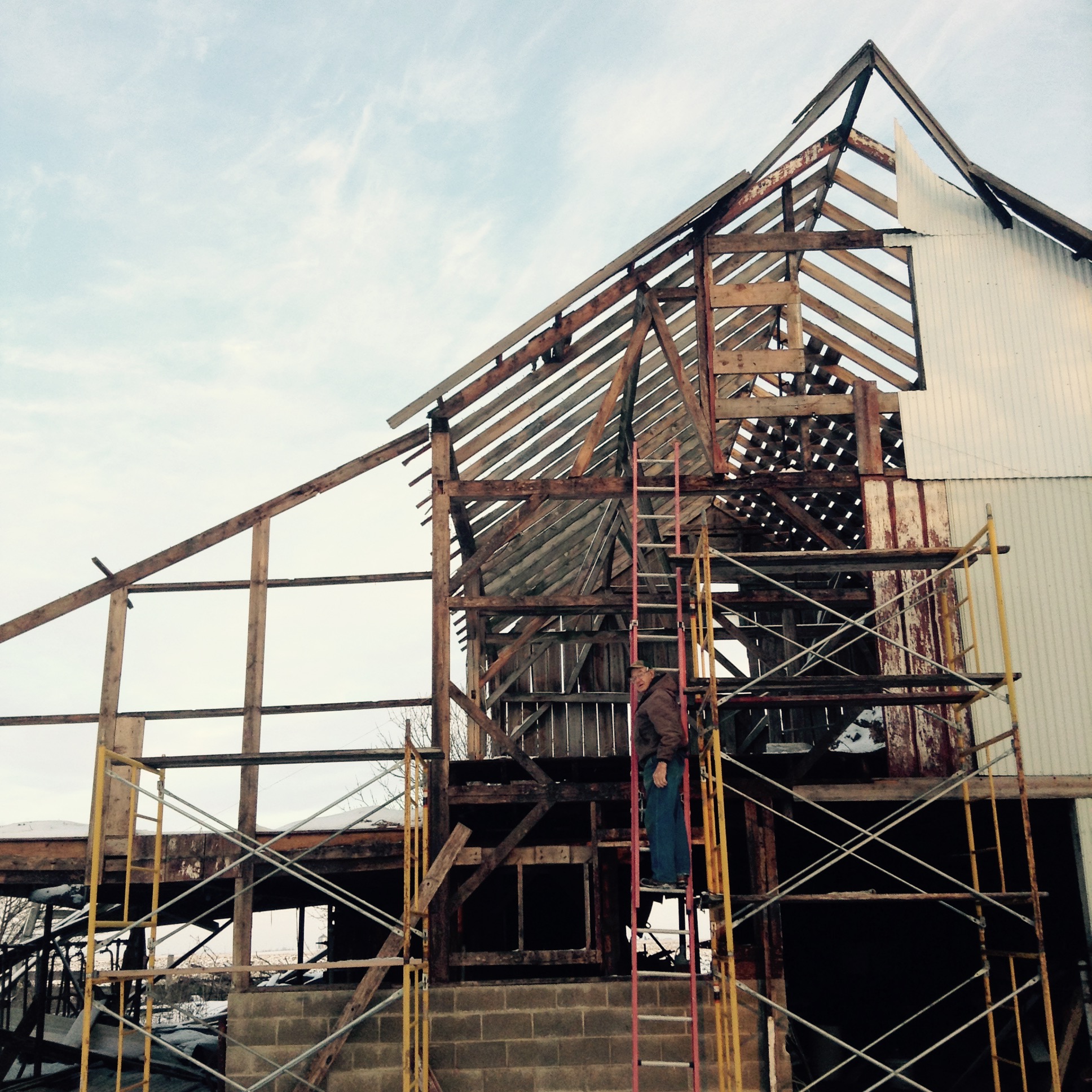 The barn was on the farmstead when he and my grandma moved onto the acreage in 1964. Over the years, depending on need, my grandpa added to both sides and the back of the barn in order to maximize the efficiency of his dairy farming. It has only been in taking down his barn, piece by piece, that he has realized the original barn is a kit barn likely purchased from either Sears or Montgomery Ward and built in the early 1900s. Ordered from a manufacturer via catalog, kit barns were delivered by train, truck, or wagon to the consumer. Think IKEA for barns. All of the lumber was pre-cut and flat-packed for assembly at any location. Here is an example of a kit barn from the early 1900s.
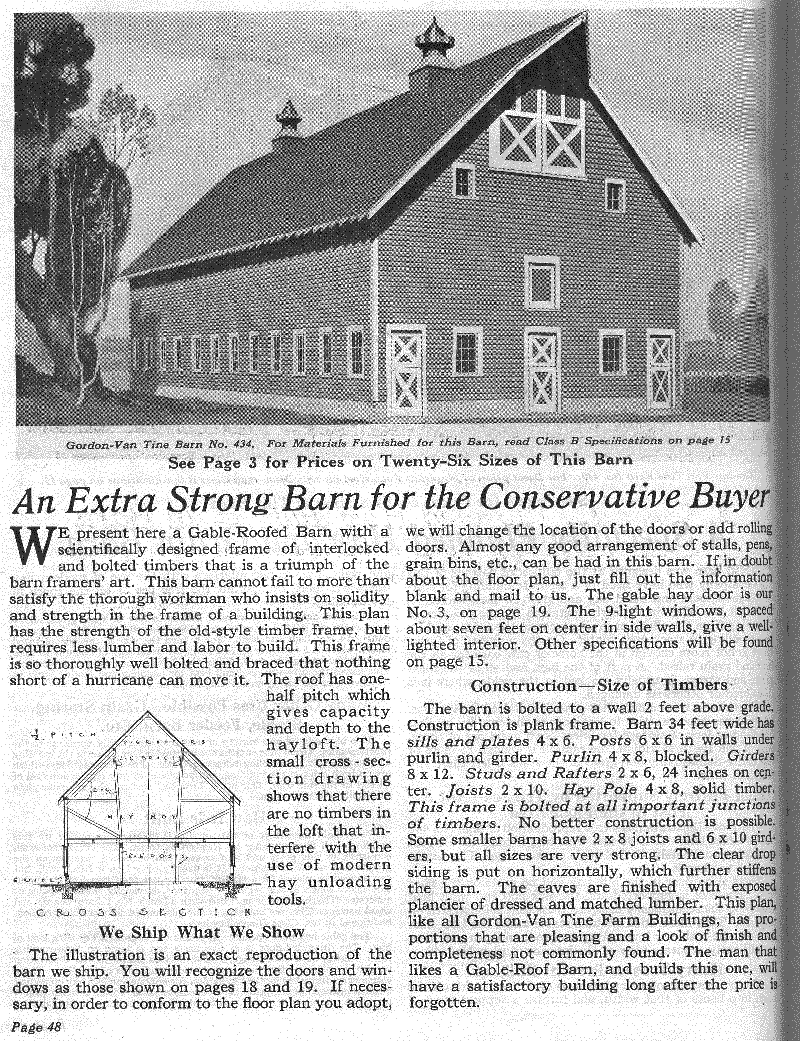
The structural elements of my grandpa’s barn are clearly mass produced as they are all perfectly cut and notched–too perfect for a human hand to complete.
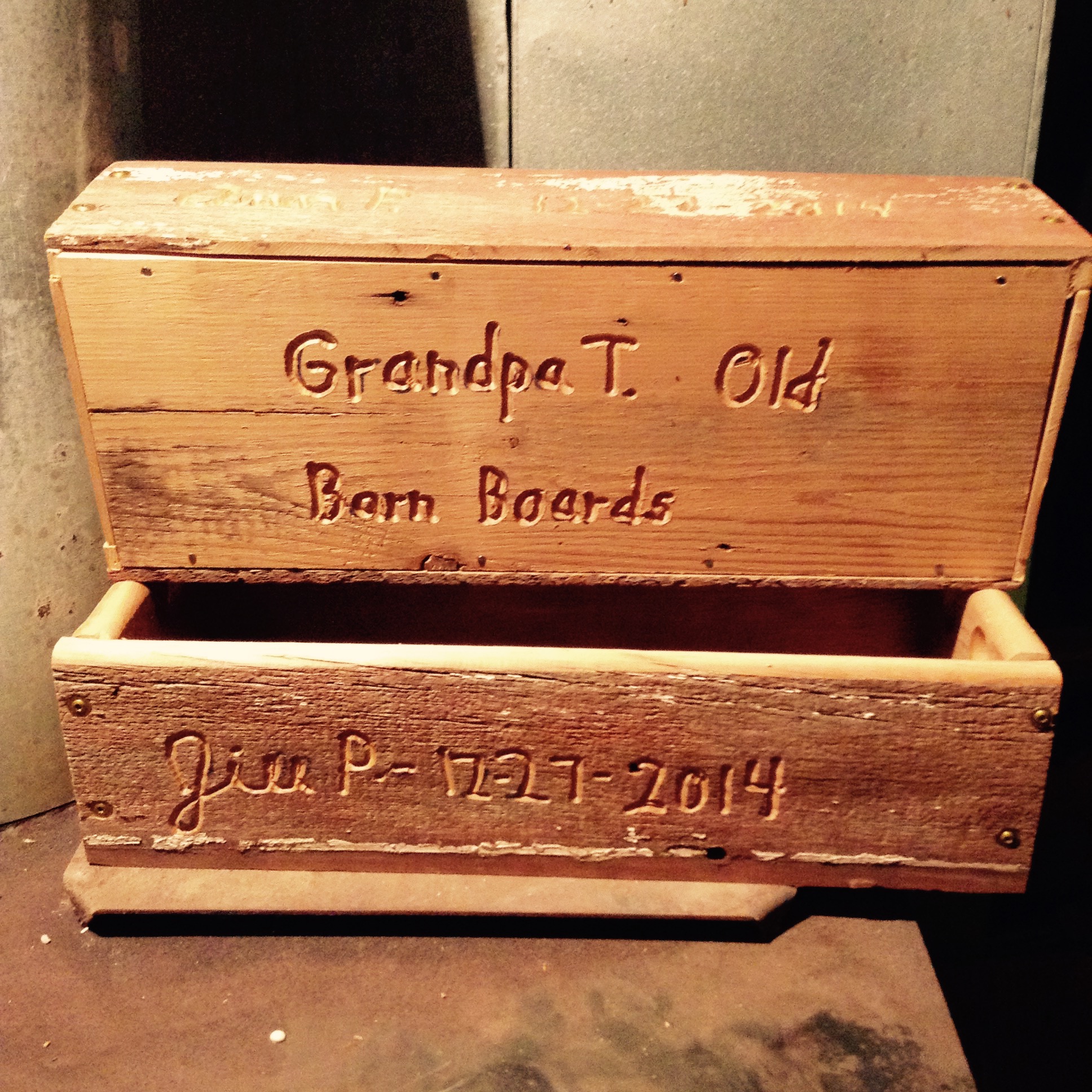
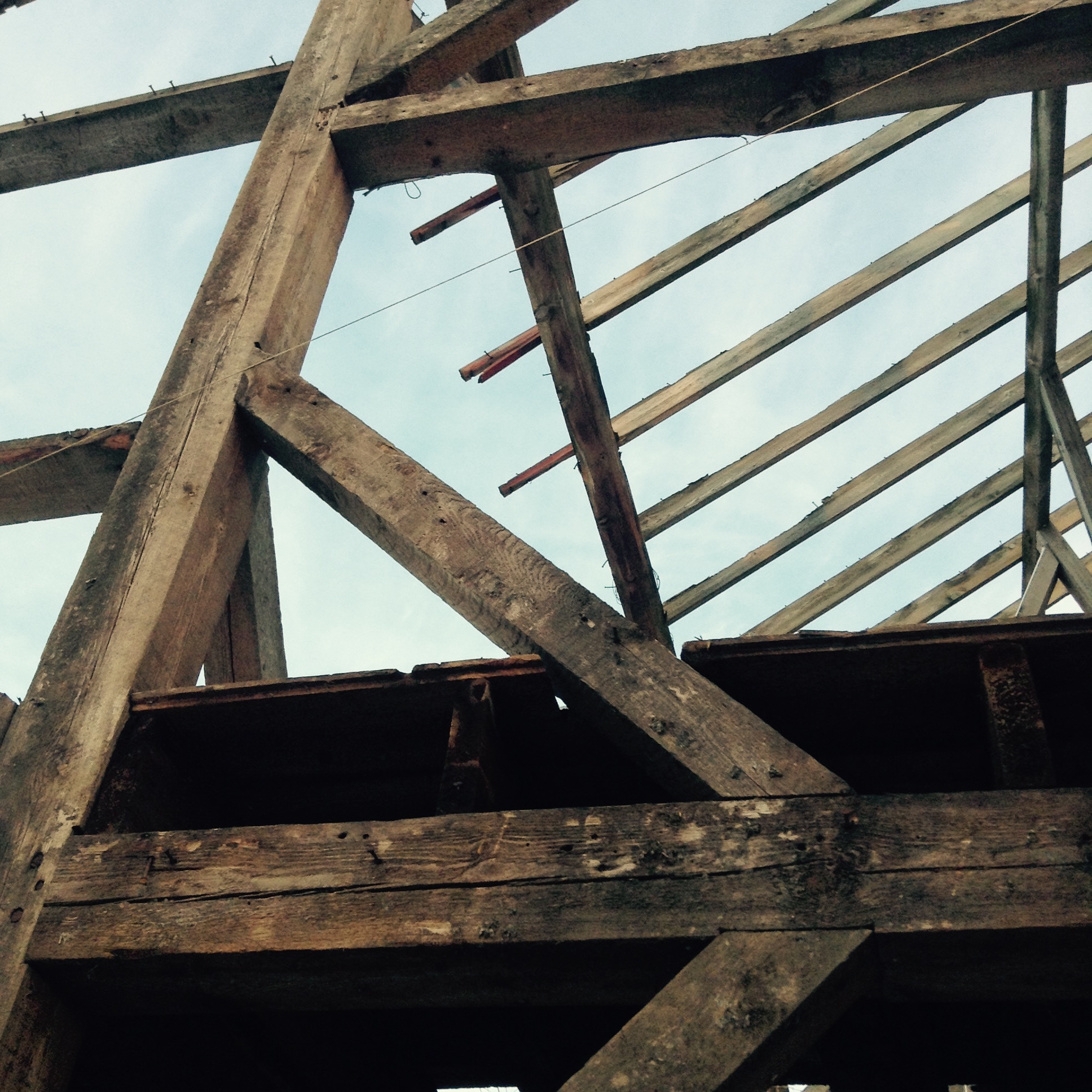 He is repurposing the salvaged barn boards for a variety of projects including lawn ornaments, head boards, crates, and trellises. He also REALLY likes his router as you will see below. 🙂
 Ultimately, he plans to use all of his salvaged lumber to rebuild the barn as a machine shed for his tractors and farm equipment. The new gable is sketched out on the extant barn with a nail and a piece of string. The string stencil can been seen, although very lightly, in the photos at the beginning of the post. As a simple barn in Iowa, the deconstruction and reuse (rather than demolition) of this structure is a prime example of the inherent potential for reuse in all buildings.