
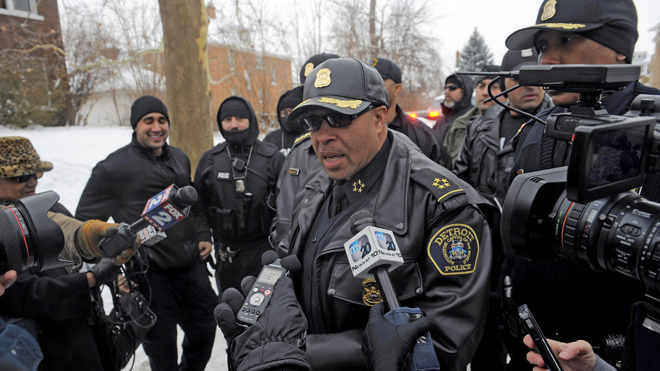
 An absurd statement for sure, and one that does not hold true for 99.9% of the world, but that was the response from Detroit Police Chief James Craig to a recent death threat he received via social media. The threat came a day after Chief Craig led one of the largest drug raids the city has ever seen, raiding 14 suspected drug houses and making 49 arrests. The chief said that the words only served to encourage him in his efforts. It was a clear sign that his raids were working at disturbing the narcotic business within the city.
Finding Hidden Feedback
Reading this story, I couldn’t help but think of the strange ways that we can receive feedback. In the absence of direct praise we sometimes have to look a bit deeper to gain insight into the success of our work. For example, the emergency financial manager of Detroit Kevyn Orr has found himself in a thankless job. He was assigned to lead a city that didn’t want him and was given the difficult task of making the city’s balance sheet healthy for the first time in many years. Praise for Mr. Orr’s work is nowhere to be seen. Even if it did exist, it would be lost in all of the headlines about parties upset by his decisions. In the absence of direct praise, Kevyn Orr could look for feedback in a different form. Bankruptcy Judge Steven Rhodes has taken his bankruptcy proposal and scheduled a very aggressive trial timeline to approve it. If the proposal holds up at trial, Detroit could exit bankruptcy less than a year after it filed—months, if not years, ahead of what many thought possible. Surely Kevyn Orr takes some satisfaction in that indirect vote of confidence from the Judge.
Testing Feedback
At other times, we may find it difficult to determine if the feedback we are receiving is authentic. Mayor Mike Duggan delivered his first State of the City address this past Wednesday. At the beginning of the meeting, when he entered the room, he was met with a standing ovation. However, my understanding of speeches such as these is that this type of greeting is the norm. Every presidential State of the Union address and governor State of the State address I’ve ever watched has started in a similar fashion. What stands out to me are the comments made by long time Detroiters about the new Mayor’s progress. Former City Council member Sheila Cockrel was quoted saying, “He hit on all the key issues that Detroiters have been grappling with day to day….It was absolutely an extraordinary speech.” A political analyst in attendance told the press that Duggan’s speech had more detail about how he would attack problems than any State of the City address in 25 years. This makes the praise for Duggan seem very genuine.
Feedback for Challenge Detroit

I can even apply this reasoning to my current employer Challenge Detroit. For an organization doing such great things, I frequently feel like it doesn’t get the amount of recognition or press that it deserves. From where does Challenge Detroit get its validation? For starters, the sheer joy expressed on the faces of our nonprofit partners when they see the work the fellows have completed is very telling. We’ve even see a few tears shed by some of the partners. Or how about the fact that there were over 700 applications for the 31 fellowship spots last year (year 3 applications are open now if you’d like to join us). I think these indicators are telling that the organization is making a large impact on the city of Detroit.
Sometimes we have to read a bit between the lines to find feedback about our jobs. In what ways do you see indirect feedback being offered?