
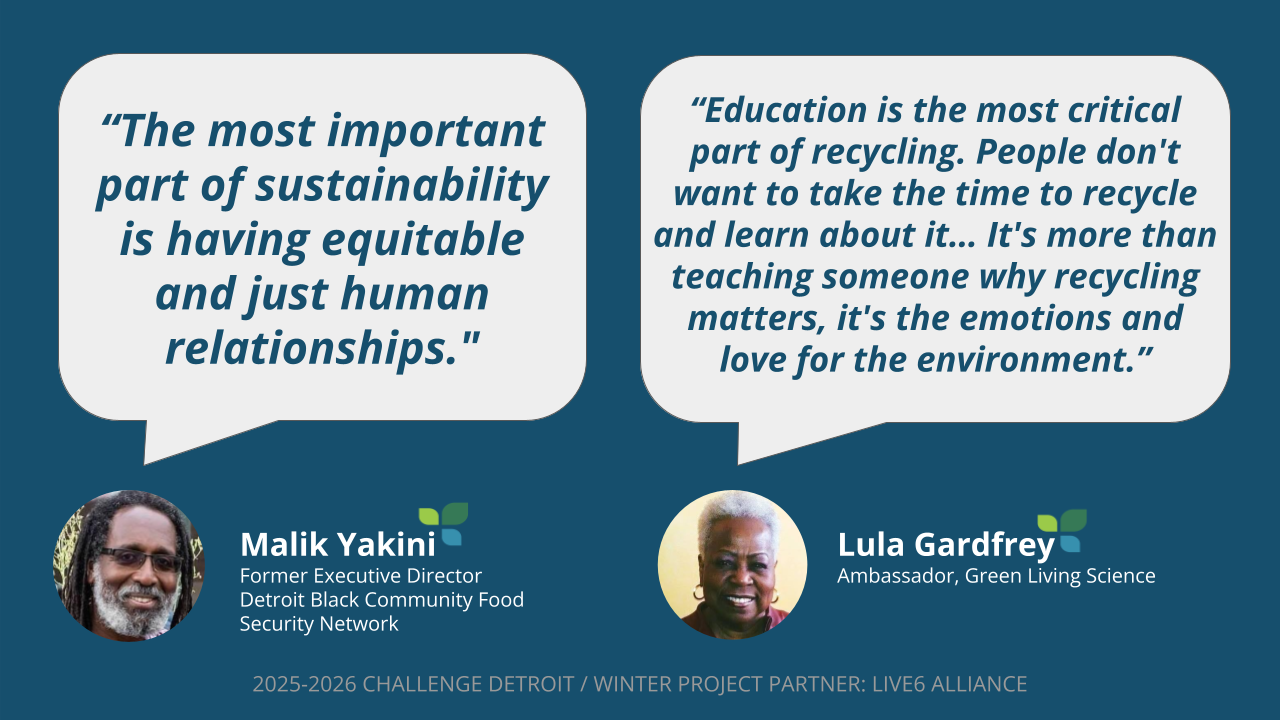
 In addressing the original design question of how to operationalize sustainable consumption habits, integrate a desirable grab-and-go food product, and enhance the Live6 corridor for the surrounding community, our work centered on redefining sustainability by intertwining environmental responsibility with social equity. Guided by the principles of dignity, reciprocal partnership, and affordability, we prioritized creating accessible pathways for everyday sustainable living. This approach was deeply informed by community voices, echoing the sentiment that “the most important part of sustainability is having equitable and just human relationships,” as articulated by Malik Yakini, and the community-focused insights of Lula Gardfrey, who emphasized that recycling and environmental education must go beyond mere instruction to foster genuine emotional connection and love for the environment.
For the environmental sustainability component, we conducted a SWOT analysis and developed both short- and long-term implementation proposals. The short-term recommendations offer immediate strategies for introducing recycling, composting, sustainable products, and community education at the Shops on Six, while the long-term plan outlines initiatives such as rain barrels, on-site cardboard compacting, industrial composting, and community gardens to support broader sustainability goals for Live6 and the corridor. Each recommendation was supplemented with potential partner contacts, product options, educational tools, and grant opportunities to facilitate execution.
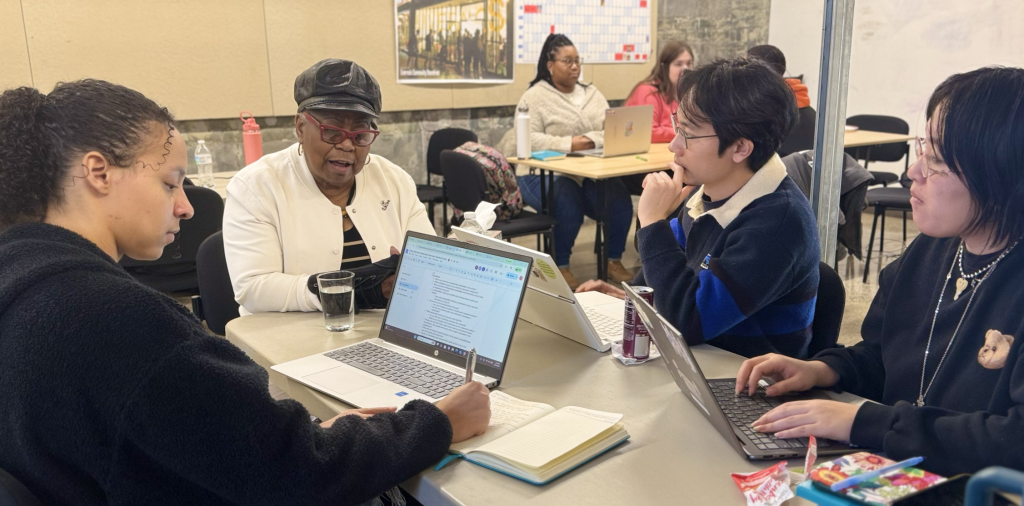
Interviewing Lula Gardfrey, Ambassador for Green Living Science.
On the food access front, we created a food vendor product mix recommendation, a food asset map, and a comprehensive cottage food vendor toolkit tailored to Michigan’s regulations and local commercial kitchen opportunities in Detroit. This toolkit serves as a structured onboarding resource to guide food entrepreneurs from home-based production to compliant, professional operations by providing clear guidance on regulatory compliance, food safety, kitchen protocols, labeling, and best business practices, thereby reducing confusion and accelerating market readiness.
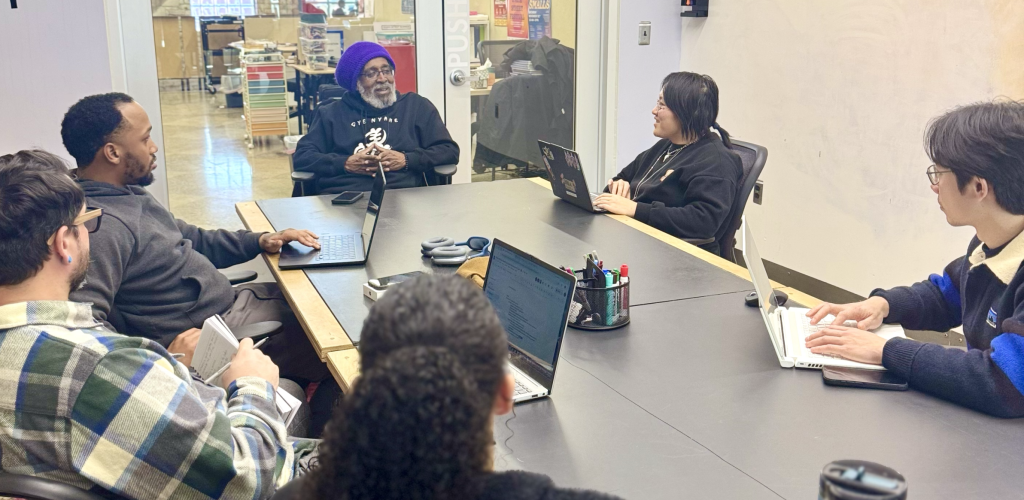
Interviewing Malik Yakini, Co-Founder and former Executive Director of Detroit Black Community Food Security Network
The food asset map fulfills two critical functions: identifying all 170 active food-related businesses in the area after filtering inactive licenses from MDARD and the city health department, and visually highlighting gaps in food offerings through a color-coded system that rates businesses based on fresh produce availability—from green for grocery stores to red for liquor and corner stores—and includes a search feature with toggle-able categories for ease of use.
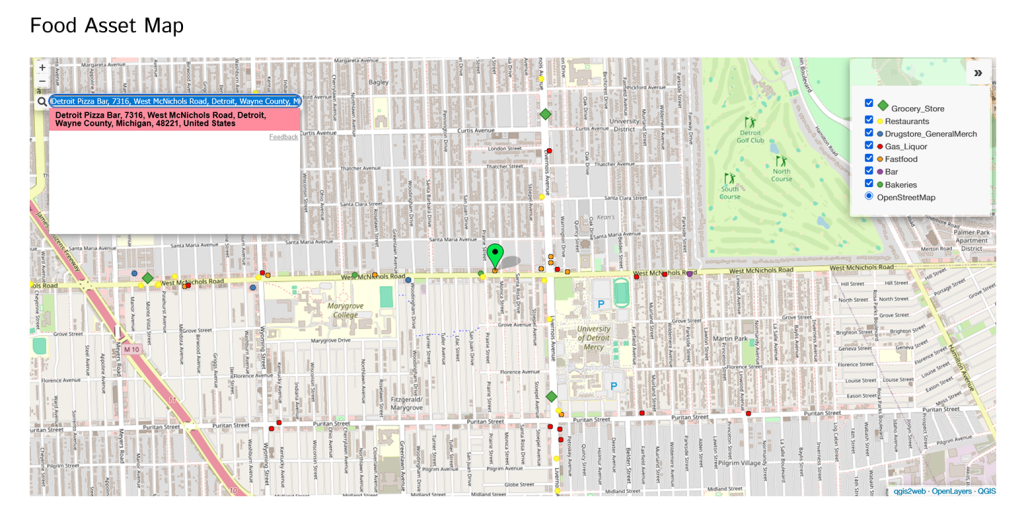
Food Asset Map for identifying all 170 active food-related businesses in the area.
We extend our deepest gratitude to Challenge Detroit, Paulette, and Deidre for entrusting us with this challenging work; to our partner Live6 and our liaison Dennis White for their invaluable guidance; and to our dedicated team for their passion and hard work in advancing sustainability and food access in the corridor.
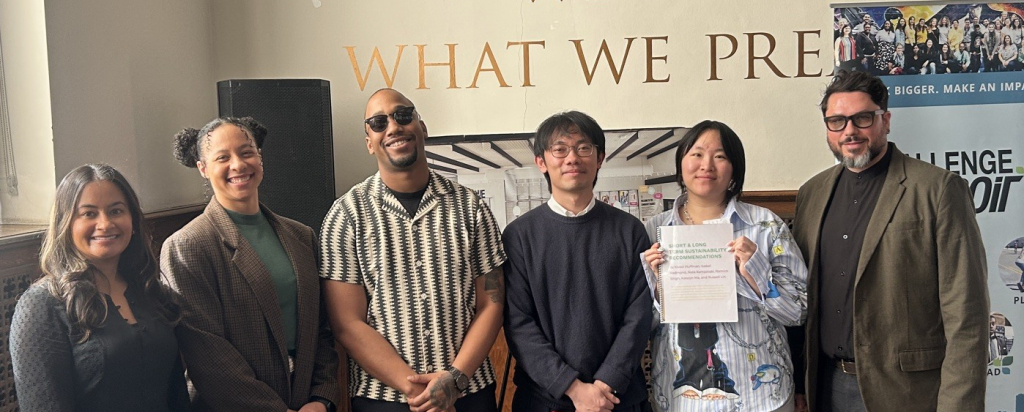
The team after our presentation at Marygrove.
For our winter project we partnered with Live6 Alliance, “a neighborhood-based community planning and development organization working to advance economic development strategies that increase opportunity and enhance the quality of life in Northwest Detroit.” Our project was focused on supporting Live6’s mission. Teams of Fellows worked alongside the Live6 Alliance team – Caitlin Murphy, Chanale Greer, Dennis White, Paul Schreiber and Taqee Vernon – as well as engaged with stakeholders, including small business owners, subject-matter experts, community leaders, residents and neighbors.
See other team blogs about our project with Live6 Alliance here.