
It was a great and unique experience working at the United Way for our second challenge. United Way was very different from our previous challenge at Matrix. While Matrix dealt with helping the local Osborne neighborhood, United Way dealt more with helping out the city of Detroit as a whole, so it provided us a larger scope for our challenge. This larger scope was interesting because it allowed a wide range of possibilities for solutions to the problem they proposed, which was how can we improve the access of fresh foods in Detroit while creating more jobs?
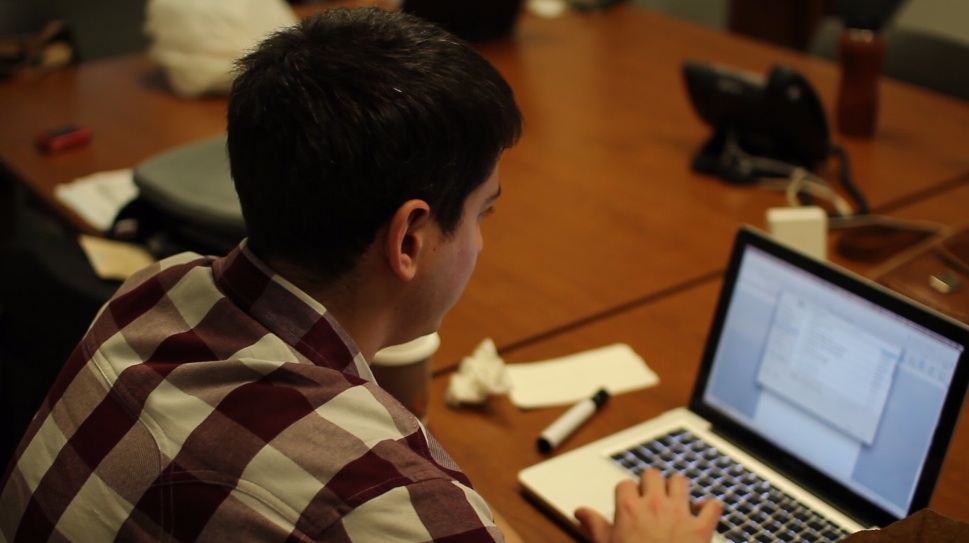
Fellow Darin Gross, working on an idea to address food access in Detroit
Being introduced to United Way our first day of the challenge, it was truly eye opening to see all the programs that United Way has to help those in need. Even though it is a big organization, they are still able to be up close and personal, helping people out on an individual level just as much as they do on a global level. I really felt that no idea we proposed would have been impossible to implement as United Way has such valuable resources to put ideas into action.
With such a large scope of an issue to solve, we were placed in smaller groups than during the Matrix challenge, allowing more groups to work on the issue and therefore more ideas to be proposed. I have had some experience in business competitions previously and the challenge at United Way was structured in a similar way. We were given guidelines for our presentations, which was very similar to how a business pitch is set up. It was interesting taking something I’m familiar with, business competitions, and focusing on an area I was initially not too familiar with, the food problem in Detroit.
Working in smaller groups, I feel we were able to plan our goals and actions for the week and communicate well with each other. We all had different ideas for a solution to the problem, so we had to do a good amount of pivoting throughout the weeks, but eventually we were able to combine many of our ideas into one solid solution for the problem which was very cool!
Overall, I feel this challenge was a huge success because the judges were not given one ultimate solution, but instead given many ideas, ranging from a completely new food system in Detroit to the simple concept of putting food stands around the city. The judges did not pick one winner, but instead are able to take this vast range of ideas and select which ideas would work best or even combine parts of our ideas into one effective solution for the food problem in Detroit!
Contributed by Fellow Darin Gross